
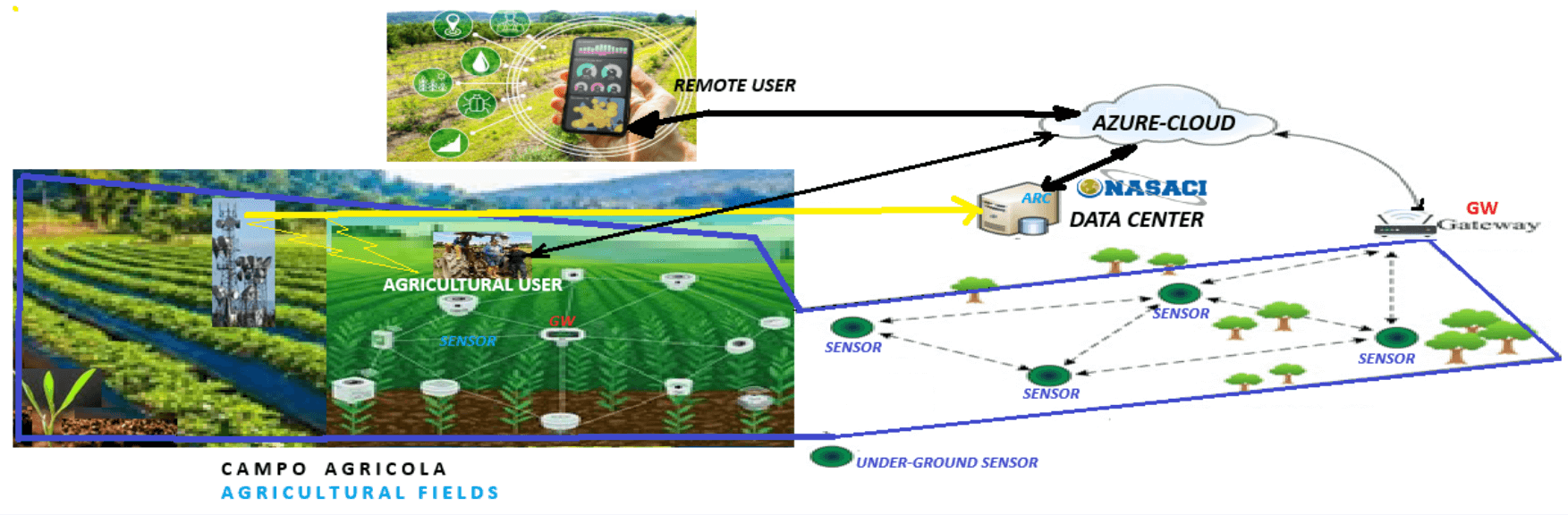
NASACI can drive a wide range of mobile apps for agriculture that are to be available in 2026, leveraging various wireless network technologies to enable precision farming, data-driven decision-making, and automation.
These apps typically can rely on cellular networks (4G, 5G, LTE-M, NB-IoT) for broad coverage or Low-Power Wide-Area Networks (LPWAN) like LoRaWAN for remote areas without cellular.
Agriculture apps and software are transforming farms and agricultural businesses operations to increase efficiency and profitability. From crop planning and field monitoring to a variety of business needs.
NASACI solutions focus; no limited, on data-driven agronomy, using field maps, soil data, and yield tracking to improve production. Software applications can be customized to the locations agricultural fields and the availability of government available data.
Agriculture mobile apps and online platforms support precision field management, crop monitoring, agronomic engineering planning, and agriculture farmers engagement.
NASACI Agriculture apps are digital tools designed to help farmers manage specific parts of their operation through mobile devices, tablets, or computers. These tools range from simple recordkeeping apps to full-scale platforms that integrate production such as soil monitoring, crop planning, or equipment tracking.
Others provide broader management systems that cover everything from customer communication to order fulfillment. Many are cloud-based, allowing for real-time updates and data sharing between field staff, managers, and outside advisors.
Using the right agriculture mobile software applications can improve nearly every part of your farm operation. Whether you're growing for wholesale markets, managing a CSA, or running a multi-acre chia, soya rice grain otherwise farms, software application helps turn complex tasks into manageable processes.
Irrigation and soil monitoring with specialized tools use sensors and weather data to optimize water use and track soil health, offering real-time moisture and salinity data to support better irrigation decisions.
Furthermore, climate changes, nutrients management, humidity tracking and ongoing possibilities to create additional applications using cloud services and artificial intelligence help for Azure.